
Last Updated: October 25, 2026
Quick Summary
Early orthodontic treatment is preventive dental care that addresses bite and alignment problems in children while their jaws are still growing, with evaluation typically recommended around age seven. However, not every child needs treatment at that age; the decision depends on whether your child has functional problems like severe crowding, bite issues affecting chewing or speech, or jaw growth concerns that benefit from early intervention.
- Phase 1 treatment typically lasts 12-24 months and uses expanders, partial braces, or removable appliances to guide jaw growth and create space for permanent teeth.
- Age seven is recommended for evaluation because children have a mix of baby and permanent teeth, allowing orthodontists to spot problems during active jaw growth.
- Functional concerns like difficulty chewing, speech problems, or mouth breathing warrant early evaluation, while cosmetic concerns like slightly crooked teeth can usually wait for Phase 2 treatment around age twelve.
- Most children who have Phase 1 treatment still need Phase 2 braces later, but Phase 1 can make Phase 2 simpler and potentially shorter.
- Monitoring without active treatment is appropriate for mild crowding, acceptable bites, or cosmetic-only concerns, with check-ups every 6-12 months to track jaw growth.
Table of Contents
- Understanding Early Orthodontic Treatment and Why the Age-Seven Recommendation Exists
- When Should a Child See an Orthodontist: Signs That Warrant an Evaluation
- Early Orthodontic Treatment Signs: What Parents Should Watch For
- Phase 1 vs Phase 2 Orthodontic Treatment: Understanding the Difference
- How Long Does Phase 1 Orthodontic Treatment Take and What to Expect
- The Real Question: Treat Now, Monitor, or Wait, A Decision Framework
- What Happens at Your Child’s First Orthodontic Evaluation
- Frequently Asked Questions
Understanding Early Orthodontic Treatment and Why the Age-Seven Recommendation Exists
Early orthodontic treatment is preventive dental care that addresses bite and alignment problems in children while their jaws are still growing. At Schatz Orthodontics, we work with families to determine whether early intervention makes sense for their child’s specific situation. Children have their first orthodontic evaluation around age seven, though this doesn’t mean every child needs treatment at that age. www.aao.org/child-orthodontics
What interceptive orthodontics actually does
Interceptive orthodontics, also called Phase 1 treatment, works with your child’s natural jaw growth. It doesn’t straighten all the teeth permanently. Instead, it guides jaw development and creates space for permanent teeth to erupt properly.
Common goals of early intervention include:
- Creating more room for crowded permanent teeth
- Correcting severe bite problems that affect chewing or speech
- Guiding jaw growth in a better direction
The key difference from full braces is scope. Phase 1 targets specific problems during active growth. It’s not trying to perfect every tooth alignment, that comes later if Phase 2 is needed.
Why seven is the recommended age for evaluation
Age seven is significant because most children have a mix of baby teeth and permanent teeth at this point. The first permanent molars are erupting, and the front permanent teeth are starting to come in.
By seven, an orthodontist can see:
- How the permanent teeth are positioned
- Whether the jaw is growing properly
- If bite problems exist that need attention
Waiting until all permanent teeth arrive (around age twelve) means missing this growth window. Some problems are easier to correct while the jaw is still developing.
When Should a Child See an Orthodontist: Signs That Warrant an Evaluation
Not every child needs early orthodontic treatment. Watch for specific signs that suggest an evaluation would be helpful. Some problems are purely cosmetic and can wait. Others affect function and deserve prompt attention.
Bite and alignment problems that need attention
Certain bite patterns and alignment issues benefit from early correction. These include:
- Overbite: Upper front teeth overlap the lower teeth significantly. Severe overbite can affect chewing and increase risk of tooth injury.
- Underbite: Lower teeth extend past upper teeth. This affects how the jaw closes and can impact speech and eating.
- Crowding: Permanent teeth don’t have enough space and overlap or twist. Crowded teeth are harder to clean and more prone to decay (Association between malocclusion, caries and oral hygiene in children 6 to 12 years old…).
These problems matter because they affect how your child’s jaw develops. Correcting them early can prevent more complex issues later.
Functional concerns versus cosmetic concerns
Functional problems affect how your child eats, speaks, or breathes. Cosmetic problems affect appearance only.
Functional concerns that warrant early evaluation:
- Difficulty chewing or pain while eating
- Speech problems (lisping, unclear pronunciation)
- Mouth breathing instead of nose breathing
Cosmetic concerns that can usually wait:
- Slightly crooked teeth
- Minor spacing
- Teeth that don’t look perfectly aligned
Functional issues often benefit from early intervention because they affect development. Cosmetic concerns can typically be addressed during Phase 2 treatment with braces, usually starting around age twelve.
Early Orthodontic Treatment Signs: What Parents Should Watch For
Your child might benefit from early orthodontic evaluation if you notice specific signs. These don’t automatically mean treatment is necessary, they mean an orthodontist should assess the situation.
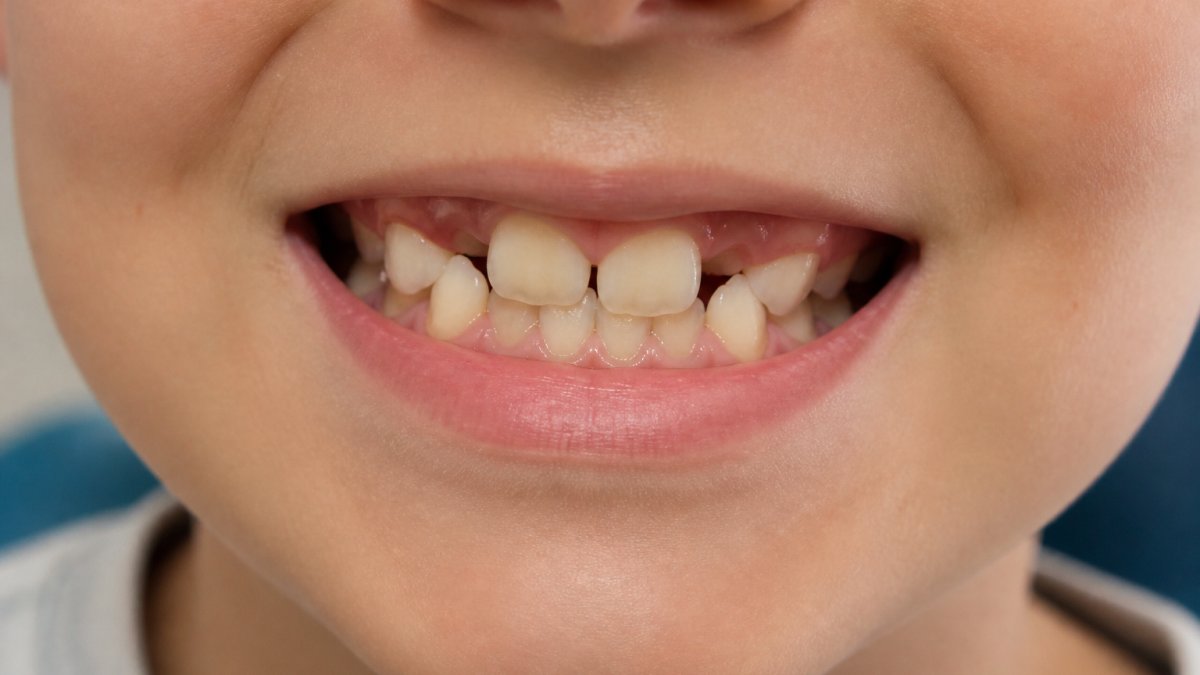
Watch for these indicators:
- Baby teeth that are very crowded or overlapping
- Permanent teeth coming in noticeably crooked or rotated
- Your child’s bite looks uneven or off-center
None of these signs guarantees your child needs treatment. They’re reasons to schedule a consultation with an orthodontist who can evaluate whether early intervention makes sense.
Phase 1 vs Phase 2 Orthodontic Treatment: Understanding the Difference
Understanding the two phases helps you make informed decisions about timing and what to expect.
What Phase 1 accomplishes and how it differs from full braces
Phase 1 treatment typically uses removable appliances or limited fixed braces to address specific problems while the jaw is still growing. Common Phase 1 appliances include:
- Palate expanders: Widen the upper jaw to create more room for teeth
- Partial braces: Fixed to just a few teeth to guide specific movements
- Removable appliances: Custom devices that guide jaw growth and tooth position
Phase 1 focuses on:
- Creating space for crowded permanent teeth
- Correcting bite problems early
- Guiding jaw growth
Phase 2 uses full braces (or aligners) to straighten all permanent teeth and refine the bite. It typically starts around age twelve when most permanent teeth have erupted.
Key differences:
|
Aspect |
Phase 1 |
Phase 2 |
|---|---|---|
|
Typical Age |
7-10 years |
12+ years |
|
Duration |
12-24 months |
18-36 months |
|
Appliances |
Expanders, partial braces, removable devices |
Full braces or aligners |
|
Goals |
Guide growth, create space, correct severe bites |
Straighten all teeth, perfect alignment |
|
Permanent Teeth |
Mostly still erupting |
All erupted |
Why Phase 2 may still be needed after Phase 1
Phase 1 sets up a better foundation. It doesn’t complete the job. Most children who have Phase 1 treatment will still need Phase 2 braces later.
Why Phase 2 is often necessary:
- Phase 1 creates space and corrects major bite problems, but teeth still need precise alignment
- Not all permanent teeth have erupted during Phase 1
- Final bite refinement requires all teeth present
The benefit of Phase 1 is that Phase 2 becomes simpler and potentially shorter. A child who had Phase 1 might need only 18 months of braces in Phase 2, while a child starting treatment at twelve without Phase 1 might need 24-30 months.
How Long Does Phase 1 Orthodontic Treatment Take and What to Expect
Phase 1 treatment typically lasts around 12 months, though some cases resolve faster and others take longer. The timeline depends on the specific problems being corrected and how your child’s jaw responds to treatment.
Factors affecting duration:
- Severity of the problem: Minor spacing might resolve in 12 months. Severe crowding or bite problems might take 24 months.
- Type of appliance: Expanders work over several months. Partial braces might work faster or slower depending on the goals.
- Your child’s compliance: Removable appliances require consistent wear. Kids who wear them as directed see results faster.
What to expect during Phase 1:
- Regular appointments every 4-8 weeks for adjustments
- Possible discomfort for a few days after appointments (similar to braces)
- Gradual changes in bite and tooth position
After Phase 1 ends, most children enter an observation phase. Their teeth and jaw are monitored while permanent teeth continue erupting. Phase 2 typically begins around age twelve.
The Real Question: Treat Now, Monitor, or Wait, A Decision Framework
The core question isn’t whether your child has a bite problem. It’s whether early treatment will genuinely improve the outcome. This framework helps you think through the decision.
When early intervention makes a genuine difference
Early treatment is most justified when:
- Severe bite problems exist: Underbite, crossbite, or open bite affecting jaw development. These worsen without intervention and become harder to fix later.
- Crowding is severe: Not enough space for permanent teeth. Creating space now prevents extractions or more complex treatment later.
- Jaw growth is off-track: One side of the jaw is growing differently. Early correction guides proper development.
In these situations, Phase 1 treatment often prevents more invasive treatment later and produces better long-term results.
When monitoring is the right choice
Monitoring means regular check-ups without active treatment. This makes sense when:
- The problem is mild: Slight crowding or small spacing that doesn’t affect function.
- The bite is acceptable: Minor overbite or underbite that doesn’t interfere with chewing or speech.
- Jaw growth looks normal: No asymmetry or unusual development patterns.
Monitoring involves seeing an orthodontist every 6-12 months. They track jaw growth and tooth eruption. If problems develop, treatment can start then. If things resolve naturally, you’ve avoided unnecessary intervention.
Potential downsides and burdens of early treatment
Early treatment isn’t risk-free. Consider these drawbacks:
- Time commitment: Regular appointments over 12-24 months, plus daily care of appliances.
- Cost: Phase 1 treatment is an additional expense on top of Phase 2 later. Most children who have Phase 1 still need Phase 2.
- Compliance challenges: Kids need to wear removable appliances consistently. Non-compliance means slower results or failure.
The key is balancing genuine functional or developmental benefits against these real burdens. If the problem is mild and cosmetic, waiting often makes more sense than committing to Phase 1 treatment.
What Happens at Your Child’s First Orthodontic Evaluation
The first visit is diagnostic. The orthodontist gathers information to determine whether early treatment is needed.
What to expect:
- Discussion of concerns: The orthodontist asks what brought you in and listens to your observations.
- Visual examination: They look at your child’s teeth, bite, jaw alignment, and facial symmetry.
- X-rays: Dental X-rays show tooth roots, jaw structure, and eruption patterns. These reveal problems not visible in the mouth.
The orthodontist won’t pressure you into treatment. Their job is to provide honest assessment and let you decide.
Deciding whether your child needs early orthodontic treatment isn’t always straightforward. Some children benefit significantly from Phase 1 intervention. Others do better waiting for Phase 2 treatment around age twelve.
Frequently Asked Questions
When should a child see an orthodontist for the first time?
The American Association of Orthodontists recommends children have their first orthodontic evaluation around age seven. At this age, permanent front teeth are beginning to erupt, and an orthodontist can assess jaw growth, tooth alignment, and bite development. Early evaluation doesn’t always mean immediate treatment—it often means monitoring your child’s growth and intervening only if specific problems emerge. Your pediatric dentist or orthodontist can recommend evaluation sooner if you notice significant bite problems or crowding.
Is early orthodontic treatment necessary for all children?
No. Not every child needs early orthodontic treatment. Some children’s teeth and jaws develop normally with no intervention needed. An orthodontist will assess your child’s individual situation—considering jaw growth, permanent tooth eruption, bite alignment, and any functional concerns—to determine whether treatment now, monitoring, or waiting is appropriate. Early intervention is most valuable when addressing specific problems like severe crossbites, underbites, or significant crowding that could affect jaw development or future treatment complexity.
What are the signs that a child might benefit from early orthodontic treatment?
Watch for persistent mouth breathing, difficulty chewing or speaking, severe crowding of baby or permanent teeth, significant overbite or underbite, crossbite (where upper and lower teeth don’t align side-to-side), open bite (front teeth don’t touch when back teeth close), or jaw clicking or discomfort. Thumb-sucking past age four or tongue thrusting can also signal the need for evaluation. If your child shows any of these signs, a consultation with an orthodontist can clarify whether early intervention would help prevent more complex problems later.
How long does Phase 1 orthodontic treatment typically take?
Phase 1 treatment usually lasts 6 to 12 months, though some cases may extend longer depending on the specific problem and how quickly your child’s jaw responds. After Phase 1 ends, there’s typically a monitoring period while permanent teeth continue to erupt. Phase 2 treatment (full braces) usually begins once most permanent teeth are in place, typically in the early teen years. Your orthodontist will give you a personalized timeline based on your child’s growth and treatment goals.

Posted on behalf of
22610 US Highway 281 North, Suite 201
San Antonio, TX 78258
Phone: (210) 494-4606